
The start of a new year is usually framed as a clean slate. From a security standpoint, it’s anything but. January consistently brings heightened risk for executives, public figures, and high-net-worth individuals as new business initiatives launch, public visibility increases, and unresolved threats from the prior year resurface. Heading into 2026, those risks are more complex, more personal, and more unpredictable than ever.
Executive protection is no longer just about reacting to threats. It’s about anticipating them early, managing exposure intelligently, and allowing leaders to operate confidently without disruption.
Why Risk Spikes at the Start of the Year
New fiscal years mean new decisions, new contracts, restructures, and layoffs. Each comes with emotional, financial, and reputational fallout. Executives are often the most visible representation of these changes, which puts them directly in the line of scrutiny.
At the same time, public-facing activity increases. Conferences resume, travel ramps up, earnings are announced, and strategic plans move from private to public. All of this creates opportunity—not just for growth, but for unwanted attention.
Executive Protection and Today’s Evolving Threat Landscape
Executive protection in 2026 must account for a broader threat spectrum than ever before. Physical threats remain a concern, but they’re often preceded by warning signs online, through social media activity, fixations, or escalating rhetoric.
Disgruntled former employees, activist groups, opportunistic criminals, and individuals experiencing personal crises all present different risk profiles. The common thread is unpredictability. A proactive protection strategy looks at behavior patterns, not just known threats.
Executive Protection Planning Beyond Bodyguards
Effective executive protection is layered. It blends personnel, planning, intelligence, and logistics into one coordinated approach. That includes advance route planning, secure transportation, travel risk assessments, residential security coordination, and discreet protective presence.
The goal isn’t to create a visible security bubble. It’s to reduce vulnerability without changing how an executive lives or works. When protection is done right, it feels seamless—and often goes unnoticed.
Travel and Executive Protection in Early 2026
January and February are heavy travel months for executives. Whether it’s board meetings, investor events, or site visits, travel introduces exposure at every step: airports, hotels, rideshares, and unfamiliar environments.
Executive protection teams mitigate this by planning ahead. That means vetting locations, monitoring local conditions, adjusting routes in real time, and maintaining situational awareness throughout the trip. It’s not about avoiding travel. It’s about traveling smarter.
Executive Protection for Corporate and Personal Environments
Risk doesn’t stop at the office door. Executives face exposure at home, during personal errands, and while attending private events. A comprehensive executive protection strategy considers the full picture, not just the 9-to-5 schedule.
This includes coordinating with residential security systems, assessing routine patterns that may create predictability, and ensuring family members are accounted for when appropriate. Protection should support daily life, not restrict it.
Discretion, Trust, and Professionalism Matter
Executive protection is as much about trust as it is about skill. The professionals assigned must be discreet, adaptable, and capable of blending into high-level environments without drawing attention.
Teams with law enforcement backgrounds bring a level of judgment and experience that can’t be improvised. They understand de-escalation, threat recognition, and decision-making under pressure—critical traits when situations evolve quickly.
Looking Ahead with Confidence
As 2026 begins, executives are facing elevated expectations alongside elevated risk. The right executive protection strategy allows leaders to stay focused on their responsibilities while knowing their safety is being actively managed.
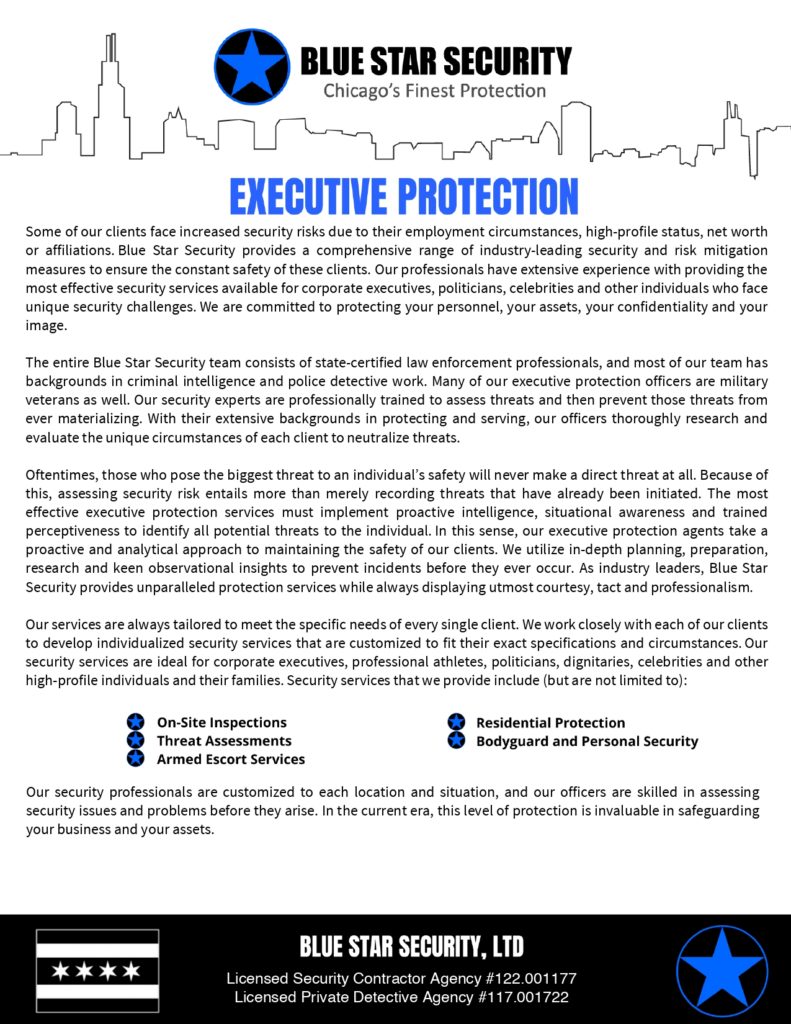
Blue Star Security provides professional executive protection services designed around discretion, planning, and real-world experience. With state-certified law enforcement professionals and a tailored approach to each client, protection is proactive, confidential, and aligned with today’s risk environment.
Learn more about Blue Star Security’s Executive Protection services
Frequently Asked Questions
Q: What is executive protection?
A: Executive protection is a comprehensive security service designed to safeguard individuals who face elevated risk due to their role, visibility, or assets. It goes beyond bodyguard services to include planning, intelligence, and risk management.
Q: Who typically needs executive protection?
A: Corporate executives, business owners, public figures, attorneys, and high-net-worth individuals often benefit from executive protection, especially during periods of increased visibility or change.
Q: Is executive protection only for travel or public events?
A: No. Executive protection can cover daily routines, residential environments, travel, and special events. Services are tailored based on individual risk profiles and needs.
Q: Will executive protection disrupt my daily life?
A: When done correctly, executive protection is discreet and minimally intrusive. The objective is to enhance safety while maintaining normal routines.
Q: How is executive protection different from standard security services?
A: Executive protection focuses on proactive risk mitigation, personal safety, and adaptability, rather than static guarding or reactive response.
Q: Can executive protection be short-term?
A: Yes. Executive protection can be provided for specific events, travel periods, or temporary risk spikes, as well as on an ongoing basis.